Sunday, July 5, 2009

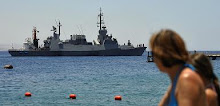
If this is true, it may explain why the Israeli sub went out through Suez. Probably have 72 hours or less now. An Arab outcry will cause SA to renig once this report gets their attention.

Saudis give nod to Israeli raid on Iran

**Also being reported in Jerusalem Post and Haaretz**

From The Sunday Times
Uzi Mahnaimi in Tel Aviv and Sarah Baxter
July 5, 2009

http://www.timesonline.co.uk/tol/new...cle6638568.ece

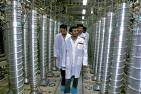
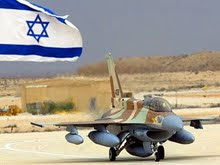
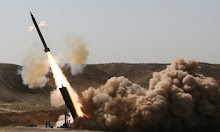
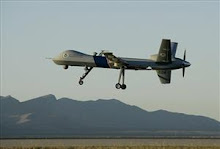
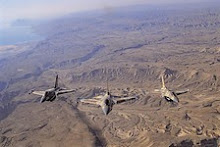
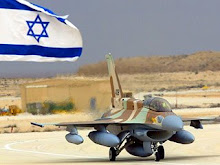
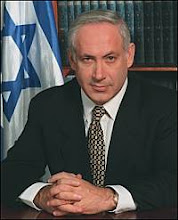
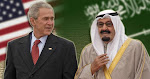
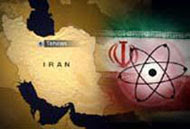
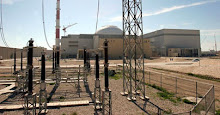
The head of Mossad, Israel’s overseas intelligence service, has assured Benjamin Netanyahu, its prime minister, that Saudi Arabia would turn a blind eye to Israeli jets flying over the kingdom during any future raid on Iran’s nuclear sites.

Earlier this year Meir Dagan, Mossad’s director since 2002, held secret talks with Saudi officials to discuss the possibility.

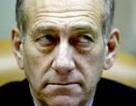
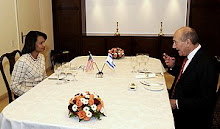
The Israeli press has already carried unconfirmed reports that high-ranking officials, including Ehud Olmert, the former prime minister, held meetings with Saudi colleagues. The reports were denied by Saudi officials.

“The Saudis have tacitly agreed to the Israeli air force flying through their airspace on a mission which is supposed to be in the common interests of both Israel and Saudi Arabia,” a diplomatic source said last week.

Although the countries have no formal diplomatic relations, an Israeli defence source confirmed that Mossad maintained “working relations” with the Saudis.

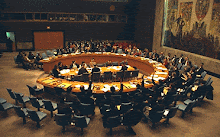
John Bolton, the former US ambassador to the United Nations who recently visited the Gulf, said it was “entirely logical” for the Israelis to use Saudi airspace.

Bolton, who has talked to several Arab leaders, added: “None of them would say anything about it publicly but they would certainly acquiesce in an overflight if the Israelis didn’t trumpet it as a big success.”

Arab states would condemn a raid when they spoke at the UN but would be privately relieved to see the threat of an Iranian bomb removed, he said.

Referring to the Israeli attack on an alleged Syrian nuclear facility in 2007, Bolton added: “To this day, the Israelis haven’t admitted the specifics but there’s one less nuclear facility in Syria . . .”

Recent developments have underscored concerns among moderate Sunni Arab states about the stability of the repressive Shi’ite regime in Tehran and have increased fears that it may emerge as a belligerent nuclear power.

“The Saudis are very concerned about an Iranian nuclear bomb, even more than the Israelis,” said a former head of research in Israeli intelligence.

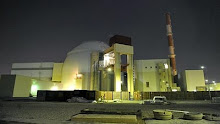
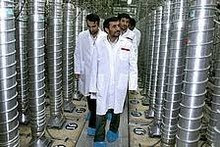
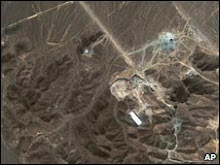
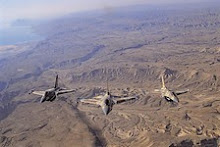
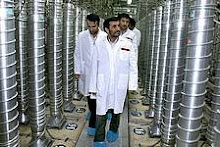
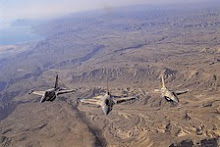
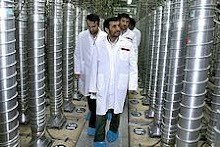
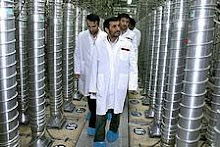
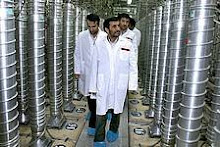
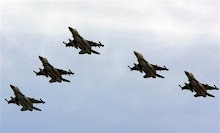
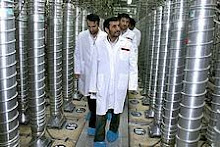
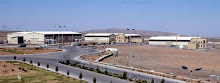
The Israeli air force has been training for a possible attack on Iran’s nuclear site at Natanz in the centre of the country and other locations for four years.

Saturday, July 4, 2009

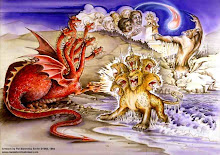
And I stood upon the sand of the sea, and saw a beast rise up out of the sea, having seven heads and ten horns, and upon his horns ten crowns, and upon his heads the name of blasphemy. (Revelation 13:1)

India Joins Russia, China in Questioning U.S. Dollar Dominance

By Mark Deen and Isabelle Mas

http://www.bloomberg.com/apps/news?pid=20601087&sid=aR7yfqUwTb4M

July 4 (Bloomberg) -- Suresh Tendulkar, an economic adviser to Indian Prime Minister Manmohan Singh, said he is urging the government to diversify its $264.6 billion foreign-exchange reserves and hold fewer dollars.

“The major part of Indian reserves are in dollars -- that is something that’s a problem for us,” Tendulkar, chairman of the Prime Minister’s Economic Advisory Council, said in an interview yesterday in Aix-en-Provence, France, where he was attending an economic conference.
Singh is preparing to join leaders from the Group of Eight industrialized nations -- the U.S., Japan, Germany, Britain, France, Italy, Canada and Russia -- at a summit in Italy next week which is due to tackle the global economy. China and Brazil (making 10!) will also send representative to the summit.

As the talks have neared, China and Russia have stepped up calls for a rethink of how global currency reserves are composed and managed, underlining a power shift to emerging markets from the developed nations that spawned the financial crisis.

“There should be a system to maintain the stability of the major reserve currencies,” Former Chinese Vice Premier Zeng Peiyan said in a speech in Beijing yesterday, highlighting China’s concerns about a global financial system dominated by the dollar.

Fiscal and current-account deficits must be supervised as “your currency is likely to become my problem,” said Zeng, who is now the head of a research center under the government’s top economic planning agency. The People’s Bank of China said June 26 that the International Monetary Fund should manage more of members’ reserves.

Russian Proposals
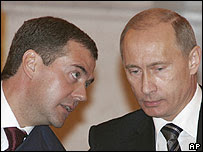
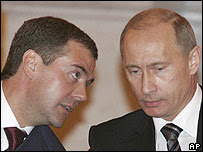
Russian President Dmitry Medvedev has repeatedly called for creating a mix of regional reserve currencies as part of the drive to address the global financial crisis, while questioning the dollar’s future as a global reserve currency. Russia’s proposals for the Group of 20 major developed and developing nations summit in London in April included the creation of a supranational currency.
“We will resume” talks on the supranational currency proposal at the G-8 summit in L’Aquila on July 8-10, Medvedev aide Sergei Prikhodko told reporters in Moscow yesterday.

Singh adviser Tendulkar said that big dollar holders face a “prisoner’s dilemma” in terms of managing their holdings. “That’s why I’m telling them to do this,” he said.

He also said that world currencies need to adjust to help unwind trade imbalances that have contributed to the global financial crisis.

“The major imbalances which led to the current situation, the current account surpluses and deficits, have to be addressed,” he said. “Currency adjustment is one thing that suggests itself.”
Emerging-Market Dependence

For all the complaints about the dollar, emerging markets such as India remain dependent on the currency of the U.S., the world’s largest economy and a $2.5 trillion export market. The IMF said June 30 that the share of dollars in global foreign- exchange reserves increased to 65 percent in the first three months of this year, the highest since 2007.

Tendulkar said that the matter needs to be taken up in international talks, and that it emphasizes the need for those talks to go beyond the traditional G-8.

“They can meet if they want to,” he said. “The G-20 has a wider role, has representation of the countries that are likely to lead the recovery process.”

Friday, July 3, 2009

Gog/MaGog Watch:
Russia Is Back on the Warpath

The West must reaffirm its support for Georgia.

Wall Street Journal
By CATHY YOUNG
June 3, 2009

http://online.wsj.com/article/SB124649267530483121.html

With President Barack Obama's trip to Moscow on Monday, you might expect Russia to avoid stirring up any trouble. Yet the Russian media are now abuzz with speculation about a new war in Georgia, and some Western analysts are voicing similar concerns. The idea seems insane.

Nonetheless, the risk is real.

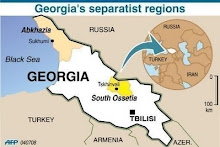
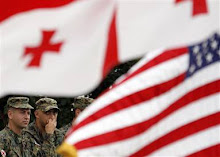
One danger sign is persistent talk of so-called Georgian aggression against the breakaway regions of Abkhazia and South Ossetia, which Russia recognized as independent states after the war last August. "Georgia is rattling its weapons . . . and has not given up on attempts to solve its territorial problems by any means," Gen. Nikolai Makarov, who commanded Russian troops in Georgia in 2008, told the Novosti news agency on June 17. Similar warnings have been aired repeatedly by the state-controlled media.

Independent Russian commentators, such as columnist Andrei Piontkovsky, note that this has the feel of a propaganda campaign to prepare the public for a second war. Most recently, Moscow has trotted out a Georgian defector, Lt. Alik D. Bzhania, who claims that Georgian President Mikheil Saakashvili "intends to restart the war."

Yet Russia is the one currently engaged in large-scale military exercises in Abkhazia, South Ossetia, and adjacent regions. Russia has also kicked out international observers from the area. On June 15, Moscow vetoed a U.N. Security Council resolution renewing the mandate of U.N. monitors in Abkhazia because it mentioned an earlier resolution affirming Georgia's territorial integrity. Negotiations to extend the mission of monitors for the Organization for Security and Cooperation in Europe have broken down thanks to Russian obstruction. Now, 225 European Union monitors are the only international presence on the disputed borders.

The expulsion of neutral observers seems odd if Russia is worried about Georgian aggression.

But it makes sense if Russia is planning an attack.

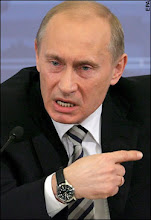
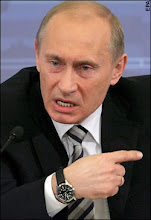
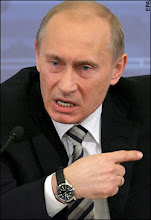
What would the Kremlin gain? A crushing victory in Georgia would depose the hated Mr. Saakashvili, give Russia control of vital transit routes for additional energy resources that could weaken its hold on the European oil and gas markets, humiliate the U.S., and distract Russians from their economic woes. Mr. Piontkovsky also believes the war drive comes from Russian Prime Minister Vladimir Putin, who is anxious to reassert himself as supreme leader.

Still, the costs would be tremendous. Last year the Kremlin repaired some of the damage to its relations with Europe and the U.S. by portraying the invasion of Georgia as a response to a unique crisis, not part of an imperial strategy. Another war would cripple Russia's quest for respectability in the civilized world, including its vanity project of the 2014 Winter Olympics in Sochi.

And after the patriotic fervor wears off, domestic discontent would likely follow. Moreover, Russia would almost certainly find itself mired in a long guerilla war. This would further destabilize a region where Russia's own provinces, Ingushetia and Dagestan, are plagued by violent turmoil.

Given all this, a war seems unlikely. What's more probable is that Russia will seek to destabilize Georgia without military action. This saber-rattling may be meant to boost Georgian opposition to Mr. Saakashvili.

Still, Moscow's actions are not always rational. If the pro-war faction believes that the Western response to an assault on Georgia would be weak and half-hearted, it could be emboldened. In a June 25 column on the EJ.ru Web site, Russian journalist Yulia Latynina writes that the probability of the war "depends solely on the Kremlin's capacity to convince itself that it can convince the world that the war is its enemies' fault."

That is why it's essential for the United States and the EU to respond now -- by increasing their non-military presence in Georgia, expressing a strong commitment to Georgian sovereignty, and reminding Russia of the consequences of aggression. Such a statement from President Obama in Moscow would go a long way toward preventing the possibility of another tragedy.

Thursday, July 2, 2009

Lieberman: We Are Always Loved When We Make Concessions

by Nissan Ratzlav-Katz
July 2, 2009

http://www.israelnationalnews.com/News/News.aspx/132183

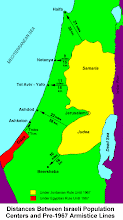
(IsraelNN.com) Foreign Minister Avigdor Lieberman on Thursday belittled the global focus on the growth of Israeli communities in Judea and Samaria, and said there would be no more unilateral concessions to the Palestinian Authority.
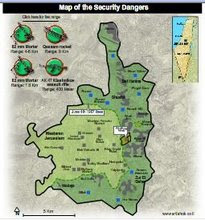
"It is not a coincidence that since [the] Oslo [Accords] we have not reached the end of the conflict," Lieberman said, addressing a gathering of Druze supporters in the Arab city of Shfaram. The meeting was held at the home of Hamad Amar, a Knesset Member representing Lieberman's Israel Beiteinu party. In the last Knesset elections, the mixed Druze, Christian and Muslim Shfaram gave Israel Beiteinu 14.4% of the vote.

The Foreign Minister said that the Netanyahu administration is prepared to take responsibility for negotiating an end to the Arab-Israeli conflict. However, he said, "taking responsibility does not mean always making concessions." Past Israeli concessions in negotiations with the Palestinian Authority have not had positive results, Lieberman observed, "even though we are always loved when we make concessions."

According to Lieberman, the issue of Israeli-PA negotiations has been blown out of all proportion in the international community. He referred to comments by German Chancellor Angela Merkel earlier on Thursday calling for a complete halt to construction in Judea and Samaria.

"I am convinced that there must be a stop to this," Merkel told the Bundestag, "otherwise we will not reach the urgently needed two-state solution."

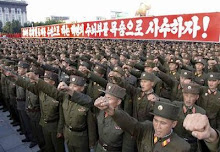
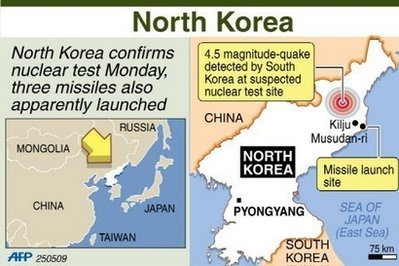
"North Korea is firing missiles and we are continuing to deal with that little house in Judea and Samaria?" Lieberman asked sharply. "Against the backdrop of events in Tehran, should this be the top priority of the global community?" He added that "Israel's true friends, in the United States and Germany," must be made to understand that the government is not going to smother the normal lives of Jews living in Judea and Samaria.

"Israel has no greater friend than the United States," Lieberman added, "which will remain Israel's most faithful and important ally, even when there are differences of opinion."

Wednesday, July 1, 2009

Barak, Mitchell remain disputed on settlements

After long meeting in Washington between defense minister, US Mideast envoy, two fail to agree on settlement freeze. Issue to be debated again when Mitchell meets PM Netanyahu in two weeks' time

Yitzhak Benhorin
07.01.09
Israel News

WASHINGTON - Defense Minister
Ehud Barak and US special envoy to the Middle East George Mitchell failed to reach an agreement regarding the Israeli construction in the settlements during their meeting in Washington Monday.

Mitchell is scheduled to meet Prime Minister Benjamin Netnayahu in about two weeks.


Full article:
http://www.ynetnews.com/articles/0,7340,L-3739614,00.html

Tuesday, June 30, 2009

Barak Enters Meeting with Mitchell

Tuesday, Jun/30/09

http://www.israelnationalnews.com/News/Flash.aspx/167249

(IsraelNN.com) The meeting between Defense Minister Ehud Barak and the U.S. envoy to the Middle East, George Mitchell, has begun in New York.
The two are expected to discuss the U.S. demand that Israel freeze construction in Judea and Samaria. Barak is expected to raise several compromise suggestions, including a temporary construction freeze for several months or construction of taller buildings instead of additional low-rise housing.


Gog/MaGog Watch:

....a great company with bucklers and shields, all of them handling swords:
Persia, Ethiopia, and Libya with them; all of them with shield and helmet:
Gomer, and all his bands; the house of Togarmah of the north quarters, and all his bands: and many people with thee.
(Ezekiel 38:4-6)


Turkey losing interest in EU

Now following 'pro-Arab Islamist' foreign policy

June 29, 2009
© 2009 WorldNetDaily
Ankara, Turkey

http://www.worldnetdaily.com/index.php?fa=PAGE.view&pageId=102526

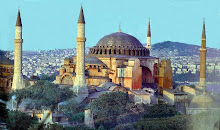
After years of being refused entry into the European Union, Turkey is losing interest and is looking eastward where it has many friends. And it is seeking to reassert the influence it once held in traditionally Turkic countries, according to a report in Joseph Farah's G2 Bulletin.

Formally, Ankara remains committed to joining the EU, but the idea of joining has lost much of its appeal after years of rejection and additional European demands to repeatedly prove that it is worthy.

Indeed, Germany and France remain adamantly opposed to Turkey's entrance to the EU. At a recent joint television appearance in Berlin, German Chancellor Angela Merkel and French President Nicolas Sarkozy made clear their opposition to Turkish EU membership.

Turkey, however, has made efforts to develop better relations with Arab states and such other countries as Russia, Syria and Iraq – and even Armenia, a traditional foe.

Arab countries which never were enamored with the post-Ottoman leadership now look with admiration to what is referred to as the "Turkish model."

In addition, Turkey is looking to re-establish its historical influence in the Turkic countries of Azerbaijan, Kazakhstan, Kyrgyzstan, Turkmenistan and Uzbekistan. In this Central Asian region, Turkey sees itself in a peacekeeping role where it either ruled or dominated for centuries.

These developments recently have emerged despite a promise by Prime Minister Recep Tayyip Erdogan when he assumed office in 2003 that he would lead Turkey into the EU.

The apparent change in course for Turkish foreign policy may be due partially to a new generation of advisers surrounding Erodogan. Turkey's new foreign minister, Ahmet Davutoglu, is one such influential adviser who has outlined what he calls a "multidimensional policy" contrary to what has been practiced.

His predecessors have focused entirely on the North Atlantic Treaty Organization, Europe and the U.S.

Observers point out that Davutoglu's origins are from what is called Central Anatolia which encompasses most of modern Turkey, the Caucasus and Iran. He is said to be heavily influenced by Islamic thought and has no hesitation in embracing Turkey's past Ottoman empire which included countries over which Turkey seeks to regain influence. Given his eastern education, Davutoglu believes that Turkey should not be so committed only to a western orientation.
Davutoglu's readily approaches countries deemed to be bad guys in the eyes of the U.S. – Syria and Iran, and such groups as Hezbollah and Hamas which the U.S. has labeled as terrorist groups.

Monday, June 29, 2009

Russia starts large-scale war games...

Keep an eye on Washington, D.C. today. See if any calamity breaks out as Mitchell tries to persuade Barak to halt settlement construction.

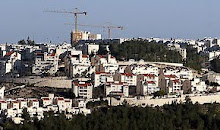
Israel approves 50 new settler homes in West Bank...

Israelis Debate Settlements as Barak Heads to New York

The Pulse
Posted June 29, 2009

http://israelpolicyforum.ngphost.com/blog/israelis-debate-settlements-barak-heads-new-york

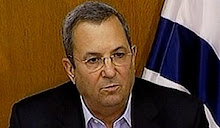
Defense Minister Ehud Barak is bringing a plan for a compromise on settlements that he will present Middle East Envoy George Mitchell ths week.

Merav David in Ma'arvi reports:
Defense Minister Ehud Barak will leave this afternoon for the US, where he is scheduled to meet tomorrow with US envoy to the Middle East George Mitchell.

Barak plans to present to Mitchell a broad plan, and to try to urge the Americans to expand the picture and not only to deal with the settlements, since such an approach could lead to a blowup and deadlock.

Barak is supposed to outline for Mitchell a number of principles for regional peace, as he and President Shimon Peres have coordinated in a long series of meetings in the past few months. If you go for a broad plan for a comprehensive arrangement in the region, you will find a real partner in the Israeli government, Barak will say. If you try to focus only on the settlements, the situation will only worsen.

With regard to settlements, Barak will propose a combined plan, which will include an Israeli commitment not to build new settlements, not to confiscate additional lands, not to build new neighborhoods, not to build anything outside the existing boundaries and to remove illegal settlement outposts within a number of weeks to months.

In exchange for all this, Israel will try to secure consent from the US for the completion of housing units that are already under construction, construction of public institutions, mainly education and health [institutions] in existing settlements, and forming an Israeli-American committee that will approve high-rise construction for natural growth purposes only in places where it is proven to be vital.

Meanwhile, members of the Knesset speak out against a settlement freeze in anticipation of Barak's meeting with Mitchell.

Matti Tuchfeld in Israel Hayom:
"Israel is fed up hearing interminable statements from top American administration officials as if stopping the settlements were the be all and end all," said a high-ranking official yesterday who is at this time preparing the meeting between Defense Minister Ehud Barak and special envoy to the Middle East George Mitchell, which will take place tomorrow. He said, "Israel will demand that any compromise on the subject be only in the broader framework of an overall regional plan, and after the principles as presented by the prime minister at Bar Ilan are accepted."

Officials involved in preparing the visit also said, "The Americans will hear firm words regarding the possibility of freezing construction in the settlements. Israel will only be willing to hear about a freeze if this is a temporary freeze, after which an explicit statement is made about continuing construction in the settlement blocs."

The defense minister related yesterday to the Yedioth Ahronoth headline saying that he planned to raise a proposal to Mitchell for freezing settlements for three months and said, "The matter has not yet been worked out. These things are still in the early stages." Barak also said, "Relations and understandings with the US are very important to Israel."

At a meeting of Likud ministers, Netanyahu said that there would be no Israeli proposal for freezing construction for a few months.

Settlers also oppose a settlement freeze, and vow to make any compromise difficult to enforce.

Zvi Singer and Itamar Eichner in Yedioth Ahronoth:
Members of the National Union faction toured settlement outposts in the Etzion Bloc and Judea yesterday, and called upon the residents to prepare for a construction boom and doubling the number of residents. The tour was conducted in response to Defense Minister Ehud Barak's proposal for a temporary construction freeze, as reported yesterday by Yedioth Ahronoth.

In the course of the tour, MK Aryeh Eldad commented on proposals to freeze construction, and said: "It is impossible to understand the silence of the Land of Israel loyalists in the Likud and other parts of the coalition, who applauded Netanyahu's 'Zionist speech' at Bar Ilan-and did not understand that whoever agrees to establish an Arab state in the Land of Israel necessarily also gives up the right of Jews to live and build in it."

Committee of Samaria Settlers Chairman Benny Katzover said during thetour, "we will find sites and locations for ourselves in order to continue construction-and I hope we will receive the support of Netanyahu's fellow party members."

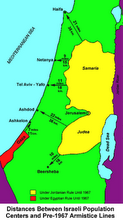
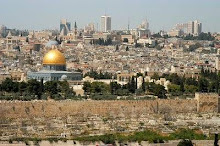
Divided Jerusalem